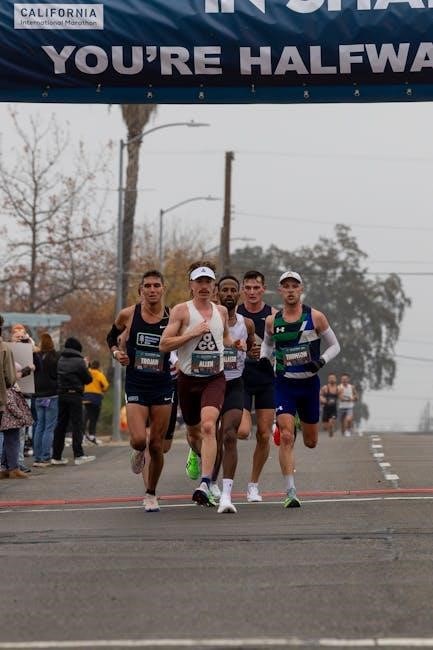
Embarking on a half marathon journey is achievable with dedication! Experts can guide you to conquer 13.1 miles, even if it seems daunting initially.
For beginner runners, or those new to racing, signing up directly for a half marathon is perfectly acceptable – a 5K or 10K isn’t a prerequisite.
If completing a half marathon is on your 2025 bucket list, you’ve come to the right place, offering guidance from tempo runs to essential stretches.
What is a Half Marathon?
A half marathon is a road running event covering 13.1 miles (21.1 kilometers) – precisely half the distance of a full marathon. It’s a challenging yet attainable goal for runners of varying experience levels, bridging the gap between shorter races like 5Ks and 10Ks and the full 26.2-mile marathon.
For beginners, understanding the distance is crucial. It’s not simply double a 10K; the added mileage demands increased endurance, strategic training, and careful attention to pacing. Successfully completing a half marathon requires consistent training over several weeks, typically 12 or more, to build the necessary stamina and prevent injuries.
The event itself often takes place on paved roads, sometimes incorporating trails, and attracts a diverse range of participants, from competitive runners aiming for personal bests to individuals seeking a personal accomplishment. It’s a fantastic way to test your limits and experience the camaraderie of the running community.
Is a Half Marathon Right for You?
Determining if a half marathon aligns with your fitness goals requires honest self-assessment. If you’re currently able to comfortably run a 5K (3.1 miles) and have been consistently running several times a week, a half marathon is likely within reach. However, it’s not simply about current ability; commitment to a structured training plan is essential.
Consider your lifestyle and time constraints. A 12-week training plan demands several runs per week, including a progressively longer weekend run. Are you prepared to dedicate the necessary time and energy? Prior running experience isn’t always necessary, but a base level of fitness is crucial to minimize injury risk.
Ultimately, a half marathon is a rewarding challenge for those willing to put in the effort. It’s a significant accomplishment that builds confidence and promotes a healthy lifestyle. Listen to your body, and don’t hesitate to adjust the plan as needed.
Benefits of Half Marathon Training
Beyond the accomplishment of crossing the finish line, half marathon training offers a wealth of physical and mental benefits. The consistent running builds cardiovascular fitness, strengthening your heart and lungs, and improving overall endurance. It’s a fantastic way to manage weight and reduce the risk of chronic diseases.
Training also enhances mental resilience. Pushing through challenging runs fosters discipline, perseverance, and a sense of self-efficacy. The structured plan provides a goal-oriented focus, reducing stress and improving mood. Interval training, a key component, wakes up the body and improves VMA (maximal aerobic speed).
Furthermore, the process encourages a healthier lifestyle, prompting mindful nutrition and prioritizing recovery. It’s a journey of self-improvement that extends far beyond the 13.1 miles.
Assessing Your Current Fitness Level
Before diving in, honestly evaluate your running background and current capabilities. Determine your baseline mileage and identify potential injury risks for a safe start.
Evaluating Your Running Experience
Beginners often wonder if prior running experience is crucial. The good news is, it isn’t! You can start a half marathon training plan even if you’re new to racing, skipping the 5K or 10K build-up. However, a realistic self-assessment is vital.
Consider your history with physical activity. Have you consistently engaged in any cardiovascular exercise, like brisk walking, cycling, or swimming? This establishes a base level of fitness. If you’re completely new to exercise, a more gradual approach is essential.
Think about any previous injuries; Have you experienced knee pain, shin splints, or other musculoskeletal issues? These could influence your training plan and require preventative measures. Be honest with yourself about your current physical condition to avoid setbacks.
Finally, reflect on your motivation. A half marathon requires commitment. Understanding your “why” will help you stay focused throughout the training process.

Determining Your Baseline Mileage
Establishing your current running capacity is fundamental before diving into a half marathon plan. This “baseline” informs how quickly you can safely increase mileage. Don’t overestimate! It’s better to start conservatively.
Over the past few weeks, track your typical weekly running distance. If you haven’t been running consistently, begin with a comfortable walking/running routine for 30 minutes, three times a week. Note the total distance covered.
A common guideline for beginners is to be able to comfortably run at least 3 miles (5 kilometers) several times a week before starting a formal training plan. This doesn’t need to be fast – focus on completing the distance.

Be realistic. Your baseline isn’t about peak performance; it’s about your current ability; This honest assessment prevents injury and ensures a successful training journey.
Identifying Potential Injury Risks
Proactive injury prevention is crucial for a successful half marathon training experience. Beginners are particularly susceptible to overuse injuries due to rapidly increasing mileage.

Common running injuries include shin splints, runner’s knee (patellofemoral pain syndrome), plantar fasciitis, and stress fractures. Understanding your personal risk factors is key.
Consider past injuries. Have you previously experienced knee pain, ankle sprains, or foot problems? These areas may require extra attention and preventative measures like targeted strengthening exercises.
Pay attention to your body. Don’t ignore pain! Early intervention is vital. If you experience persistent discomfort, consult a physical therapist or medical professional. Proper form and appropriate footwear are also essential for minimizing risk.
The 12-Week Half Marathon Training Plan
This plan progressively builds endurance and speed! It’s structured in three phases: base building, strength/speed work, and peak training with crucial tapering preparation.
Phase 1: Base Building (Weeks 1-4)
The initial four weeks focus on establishing a solid foundation. This phase prioritizes gradually increasing weekly mileage, avoiding sudden jumps that could lead to injury. Focus on consistency over intensity, building your aerobic base.
Long run progression is key; slowly extend the distance of your longest weekly run, adding no more than 10% each week. Complement this with frequent easy pace runs – conversational pace where you can comfortably hold a dialogue.
The goal isn’t speed, but time on your feet. This phase “wakes up the body,” preparing it for more demanding workouts later. Remember, the body learns to adapt, and consistent effort is paramount during these foundational weeks. Prioritize listening to your body and adjusting the plan as needed.
Increasing Weekly Mileage
Gradual progression is the cornerstone of safe and effective training. Avoid the temptation to rapidly increase your running distance; a 10% weekly increase is a generally accepted guideline for beginners. This minimizes stress on your muscles, tendons, and joints, reducing injury risk.

Focus on adding mileage incrementally across all your runs, not just the long run. For example, if you ran 10 miles total last week, aim for 11 miles this week. Prioritize consistency; several shorter runs are more beneficial than one long, strenuous effort if you’re just starting.
Remember to incorporate rest days to allow your body to recover and adapt. Listen to your body – if you feel pain, reduce mileage or take an extra rest day. Building a strong base takes time and patience.
Long Run Progression
The long run is pivotal for half marathon preparation, building endurance and mental fortitude. Begin with a comfortably manageable distance, perhaps 3-4 miles, and gradually increase it each week. A safe progression involves adding no more than one mile to your long run each week.
Don’t be afraid to include “cutback” weeks, where you slightly reduce the long run distance to allow for recovery. This prevents overtraining and helps your body adapt. Focus on completing the distance at an easy, conversational pace – this isn’t about speed, it’s about time on your feet.
As you approach race day, your longest run should reach approximately 10-11 miles. Remember to practice your race day fueling and hydration strategies during these longer efforts.
Easy Pace Runs
Easy runs form the foundation of your half marathon training, building aerobic base and recovery. These should constitute the majority of your weekly mileage, performed at a conversational pace – you should be able to hold a full conversation without gasping for air.
Don’t worry about speed during easy runs; focus on maintaining a comfortable effort level. This pace allows your body to recover from harder workouts and prepares you for longer distances. Think of them as building endurance, not pushing limits.
Easy runs help improve your body’s ability to utilize fat as fuel, crucial for longer races. Incorporate them regularly throughout your training plan, even on recovery days after intense sessions.
Phase 2: Strength and Speed (Weeks 5-8)

Weeks 5-8 shift focus to building both strength and speed, preparing your body for more demanding workouts. This phase introduces interval training, short, intense efforts designed to improve your VMA (maximal aerobic speed) and overall running efficiency.
Don’t aim for full sprints; the goal is to “wake up” your body and increase your speed capacity. Complement these with tempo runs – sustained efforts at a comfortably hard pace – to enhance endurance.
Crucially, incorporate strength training specifically for runners, targeting core, legs, and glutes. This builds stability, prevents injuries, and improves running form. Remember to balance intensity with adequate recovery to avoid overtraining.
Interval Training Workouts
Interval training is key to boosting speed and VMA (maximal aerobic speed) during weeks 5-8. These workouts involve alternating between high-intensity bursts and recovery periods, effectively challenging your cardiovascular system.
Beginners should start with shorter intervals, such as 400-meter repeats with equal recovery jogs. For example, run 400 meters at a challenging pace, then jog 400 meters to recover. Repeat this 6-8 times.
Gradually increase the interval distance or reduce the recovery time as you improve. Focus on maintaining good form throughout each interval. Remember, the goal isn’t to sprint, but to run at a comfortably hard pace. Prioritize quality over quantity, and always warm up and cool down properly.
Tempo Runs for Endurance
Tempo runs are sustained efforts at a comfortably hard pace, crucial for building endurance during weeks 5-8 of your training. These runs improve your lactate threshold, allowing you to run faster for longer periods.
Beginners should start with a 20-minute tempo run, preceded and followed by a 10-minute easy jog warm-up and cool-down. The tempo pace should feel challenging, but sustainable – you should be able to speak in short sentences.
Gradually increase the duration of the tempo run by 5-10 minutes each week, up to a maximum of 40 minutes. Focus on maintaining a consistent pace throughout the tempo portion. These runs, alongside interval training, are foundational for half marathon success.
Strength Training for Runners
Integrating strength training into your half marathon plan (weeks 5-8) is vital for injury prevention and improved running efficiency. Focus on exercises that strengthen key muscle groups used in running, including legs, core, and glutes.
Beginners should aim for two to three strength training sessions per week. Include exercises like squats, lunges, planks, and calf raises. Use bodyweight initially, gradually adding resistance with dumbbells or resistance bands.
Prioritize proper form over lifting heavy weights. A strong core stabilizes your body, improving posture and reducing strain. Consistent strength work complements your running, building resilience and enhancing performance throughout your training journey.
Phase 3: Peak Training (Weeks 9-11)
Weeks 9-11 represent the peak of your half marathon training, demanding increased intensity and strategic preparation. This phase includes your longest long run, crucial for building endurance and mental fortitude. Gradually increase the distance, but avoid significant jumps to prevent injury.
Incorporate race pace workouts to familiarize your body with the speed you aim to maintain on race day. These runs build confidence and refine your pacing strategy. Simultaneously, begin tapering – reducing mileage to allow your body to recover and store energy.
Tapering is not about stopping; it’s about smart recovery. Maintain intensity but decrease volume, ensuring you arrive at the starting line feeling fresh and prepared to conquer 13.1 miles!
Longest Long Run

Your longest long run is the cornerstone of half marathon preparation, typically occurring around weeks 9-11 of your training plan. This run isn’t about speed; it’s about time on your feet, building endurance and mental toughness. Aim for approximately 10-11 miles, but listen to your body and adjust accordingly.
Gradually increase your long run distance each week leading up to this peak, avoiding sudden jumps that could lead to injury. Practice your race day fueling and hydration strategies during these long runs to identify what works best for you.
Remember, the goal is to finish strong, not to set a personal record. Focus on maintaining a comfortable pace and enjoying the experience. This run builds confidence and prepares you for the demands of race day!
Race Pace Workouts
Integrating race pace workouts into your training is crucial for dialing in your target speed. These sessions help your body become efficient at the pace you intend to maintain during the half marathon. Begin by incorporating shorter intervals at your goal pace, gradually increasing the duration as you progress.
For example, try 4-6 repetitions of 800 meters at race pace with equal recovery jogs in between. As you get closer to race day, include longer sustained efforts, like a 3-5 mile run at your target pace.
These workouts build confidence and familiarize you with the physical sensations of running at race intensity. Don’t overdo it – quality over quantity is key!
Tapering Preparation
Tapering is a vital phase, often underestimated, in any half marathon training plan. It involves strategically reducing your mileage in the weeks leading up to the race to allow your body to recover and store energy. This isn’t about becoming inactive; it’s about smart recovery!
Typically, begin tapering 2-3 weeks before race day. Reduce your weekly mileage by 10-20% each week, while maintaining some intensity with shorter, faster workouts. Resist the urge to cram in extra miles – trust the work you’ve already done.
Prioritize sleep, nutrition, and hydration during this period. Focus on carb-loading in the final days to maximize glycogen stores. A well-executed taper ensures you arrive at the starting line feeling fresh and ready to perform your best.
Nutrition and Hydration for Half Marathoners
Proper fueling and hydration are paramount for success! Focus on consuming adequate carbohydrates, electrolytes, and fluids before, during, and after your training runs and race.
Fueling Before, During, and After Runs
Pre-run nutrition should prioritize carbohydrates to maximize glycogen stores, providing sustained energy. Consume a meal rich in carbs 2-3 hours before a long run, or a smaller snack like a banana 30-60 minutes beforehand.
During runs exceeding 60-75 minutes, replenish energy with easily digestible carbohydrates like gels, chews, or sports drinks. Aim for 30-60 grams of carbs per hour, adjusting based on individual needs and intensity.
Post-run recovery demands replenishing glycogen and repairing muscle tissue. Within 30-60 minutes, consume a combination of carbohydrates and protein. Chocolate milk, a protein shake with fruit, or a balanced meal are excellent choices. Prioritize hydration by drinking plenty of fluids to replace those lost through sweat.
Hydration Strategies
Maintaining adequate hydration is crucial throughout your half marathon training. Begin hydrating several days before long runs, not just the day of. Drink water consistently throughout the day, aiming for pale yellow urine as an indicator of proper hydration levels.
During runs, especially those lasting over an hour, carry water or utilize hydration stations. Sip fluids regularly, rather than gulping large amounts at once. Consider sports drinks to replenish electrolytes lost through sweat, particularly sodium.
Post-run rehydration is equally important. Continue drinking fluids to restore fluid balance. Monitor your weight before and after runs to estimate fluid loss and adjust intake accordingly. Don’t forget that individual hydration needs vary based on factors like climate, intensity, and sweat rate.
Essential Electrolytes
Electrolytes are minerals lost through sweat during running, vital for maintaining fluid balance, nerve function, and muscle contractions. Sodium, potassium, magnesium, and calcium are key electrolytes runners need to replenish.
Sodium is particularly important, as it’s lost in the highest concentration through sweat. Sports drinks often contain sodium, but for longer runs or heavy sweaters, electrolyte tablets or gels may be necessary. Potassium helps regulate muscle function, while magnesium aids in preventing cramps.
Calcium is crucial for bone health and muscle contractions. Pay attention to your body’s signals – muscle cramps or fatigue can indicate electrolyte imbalances. Experiment with different electrolyte sources during training to find what works best for you.

Injury Prevention and Recovery
Prioritize warm-ups and cool-downs to prepare muscles and aid recovery. Rest is paramount; listen to your body and address discomfort promptly to avoid setbacks.
Common Running Injuries
Beginner runners are particularly susceptible to certain injuries due to rapidly increasing mileage and unfamiliar stress on the body. Shin splints, characterized by pain along the tibia, are incredibly common, often stemming from improper footwear or sudden increases in training intensity.
Runner’s knee, or patellofemoral pain syndrome, presents as discomfort around the kneecap and can be caused by muscle imbalances or poor running form. Stress fractures, tiny cracks in the bone, develop from repetitive impact and insufficient recovery.
Plantar fasciitis, inflammation of the tissue on the bottom of the foot, causes heel pain and is often linked to inadequate stretching. Achilles tendinitis, inflammation of the Achilles tendon, results in pain in the back of the heel. Early recognition and addressing these issues with rest, ice, compression, and elevation (RICE) are crucial for a successful training journey.
Warm-up and Cool-down Routines
Prioritizing warm-ups and cool-downs is essential for injury prevention and optimal performance. A dynamic warm-up prepares your muscles for activity, including leg swings, arm circles, and torso twists – focusing on movement, not static stretching. This increases blood flow and improves range of motion.
Before each run, spend 5-10 minutes warming up, gradually increasing your pace. Following your run, a cool-down is equally important. Begin with 5-10 minutes of walking, gradually decreasing your pace.
Incorporate static stretches, holding each stretch for 30 seconds, targeting major muscle groups like hamstrings, quads, calves, and hip flexors. These routines enhance flexibility, reduce muscle soreness, and promote recovery, contributing significantly to a successful and sustainable half marathon training plan.
Importance of Rest and Recovery
Rest and recovery are non-negotiable components of any successful half marathon training plan. Your body needs time to repair muscle tissue and replenish energy stores after strenuous workouts. Ignoring this can lead to overtraining, injuries, and burnout.
Schedule rest days into your weekly routine, allowing your body to fully recover. Active recovery, like light walking or swimming, can also aid in muscle repair. Prioritize sleep – aim for 7-9 hours of quality sleep each night to optimize recovery processes.
Listen to your body and don’t push through pain. Incorporate recovery techniques like foam rolling and massage to address muscle soreness and tightness. Adequate rest and recovery are just as crucial as the workouts themselves, ensuring you reach the starting line healthy and prepared.
Race Day Strategies

Prepare a pre-race checklist, focusing on pacing and strategy for success. Post-race recovery is vital; prioritize hydration, nutrition, and gentle movement for optimal healing.
Pre-Race Checklist
Essential Gear: Lay out your running attire the night before – shoes, socks (moisture-wicking!), shorts, and a comfortable shirt. Don’t try anything new on race day! Pack safety pins for your bib, and consider anti-chafing balm to prevent discomfort.
Nutrition & Hydration: Prepare a pre-race breakfast you’ve practiced during training. Aim for easily digestible carbohydrates. Hydrate consistently in the days leading up to the race, and sip water or a sports drink before the start.
Logistics: Confirm race packet pickup details and location. Plan your transportation to the start line, accounting for potential traffic. Know the course map and locate restrooms. Charge your running watch or phone.
Mental Preparation: Visualize a successful race. Review your pacing strategy. Remind yourself of all the hard work you’ve put in. Stay calm and focused!
Pacing and Strategy
Start Conservatively: Resist the urge to go out too fast! Many beginners make this mistake. Begin at a comfortable pace, slower than your goal race pace, for the first few miles. This conserves energy for the later stages.
Even Splits: Aim for consistent pacing throughout the race – even splits. Avoid significant fluctuations in speed. Use your running watch to monitor your pace and stay on track.
Listen to Your Body: Pay attention to how you feel. Adjust your pace if needed; Don’t push through pain. Walk breaks are perfectly acceptable, especially if you’re feeling fatigued.
Break it Down: Mentally divide the race into smaller, manageable segments. Focus on reaching the next mile marker, rather than the finish line. Positive self-talk can be incredibly helpful!
Post-Race Recovery
Immediate Needs: Immediately after finishing, keep moving! Walk around to prevent stiffness. Replenish fluids and electrolytes – water, sports drinks, or electrolyte tablets are crucial. Consume a snack with carbohydrates and protein within 30-60 minutes to begin muscle recovery.
The First 24 Hours: Prioritize rest and sleep. Gentle stretching can help reduce muscle soreness. Avoid strenuous activity. Continue to hydrate and eat nutritious meals. An ice bath or cold compress can minimize inflammation.
Following Days: Gradually reintroduce light activity, such as walking or cross-training. Listen to your body and avoid pushing yourself too hard, too soon. Continue with proper nutrition and hydration. Allow adequate time for full recovery before resuming intense training.
Long-Term: Reflect on your race and identify areas for improvement. Celebrate your accomplishment!