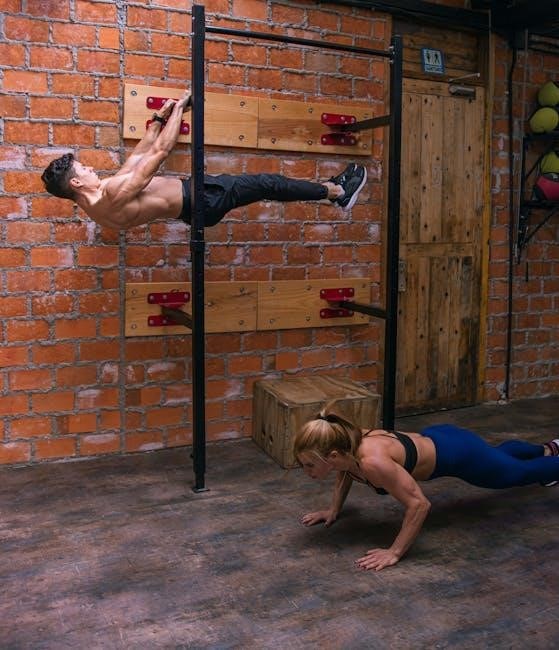
Push Pull Legs (PPL) 12-Week Program: A Comprehensive Guide
This 12-week program is a structured plan for intermediate lifters, focusing on balanced muscle growth and strength gains through periodization and consistent progression.
What is a Push Pull Legs (PPL) Split?
The Push Pull Legs (PPL) split is a highly effective workout routine dividing exercises based on movement patterns. “Push” day targets chest, shoulders, and triceps – muscles used for pushing motions. “Pull” day focuses on back, biceps, and posterior deltoids, engaging muscles for pulling. “Legs” day, naturally, concentrates on all lower body muscle groups.
This split allows for focused muscle group training, followed by adequate recovery before re-stimulation. A typical PPL schedule involves training each group once or twice a week, often structured as PPL-Rest-PPL-Rest or PPL-PPL-Rest. It’s a powerful method for maximizing muscle growth and strength, adaptable to various fitness levels and schedules, offering flexibility for school, work, or family commitments.
Benefits of a PPL Routine
A Push Pull Legs routine offers numerous advantages for fitness enthusiasts. It allows for higher training frequency, stimulating muscle protein synthesis more often than full-body workouts. By grouping muscles by movement, you can dedicate focused energy to each session, maximizing intensity and effectiveness.
The split also promotes efficient recovery; muscles worked on one day have several days to rest before being targeted again. This balanced approach minimizes overtraining risk and supports consistent progress. Furthermore, PPL is highly adaptable, easily adjusted to fit individual schedules and goals, making it a sustainable long-term training strategy for strength and hypertrophy.
Is PPL Suitable for Beginners?
While a PPL program is incredibly effective, it’s generally more suited for individuals with some lifting experience. Beginners may benefit from mastering fundamental movement patterns with simpler routines first. The higher volume and frequency of a PPL split can be overwhelming and increase injury risk if proper form isn’t established.
However, a modified PPL approach can work for motivated beginners. Starting with fewer sets and exercises, focusing on technique, and prioritizing recovery is crucial. It’s advisable to spend a few months building a solid foundation before diving into a full 12-week PPL program.

The 12-Week PPL Program Structure
The program is divided into three phases: foundation/endurance (Weeks 1-4), strength building (Weeks 5-8), and hypertrophy/peak performance (Weeks 9-12).
Phase 1: Weeks 1-4 – Foundation & Muscle Endurance
The initial four weeks concentrate on establishing a solid foundation of muscle endurance and proper form. This phase prioritizes higher repetitions with moderate weights, preparing your muscles and joints for the more intense phases ahead. Focus on mastering exercise technique to minimize injury risk and maximize muscle activation.
Expect a volume of exercises designed to build a base level of fitness. This isn’t about maximal strength; it’s about building work capacity and teaching your body to move efficiently. Consistent effort during these weeks will pay dividends in subsequent phases, setting the stage for significant strength and hypertrophy gains.
Workout Frequency & Rest
During Phase 1, aim for a workout schedule of three to four PPL sessions per week, allowing for adequate recovery between each session. A common approach is to perform Push, Pull, and Legs on consecutive days, followed by a rest day, and then repeat the cycle. Prioritize 7-9 hours of quality sleep each night to support muscle recovery and growth.
Rest days are crucial; don’t underestimate their importance. Active recovery, such as light cardio or stretching, can also be beneficial. Listen to your body and adjust the frequency based on your individual recovery needs. Proper rest ensures you’re prepared for the next workout and minimizes the risk of overtraining.
Phase 2: Weeks 5-8 – Strength Building
Transitioning into Phase 2, the focus shifts towards building maximal strength. Reduce the repetition range to 6-8 reps per set, increasing the weight lifted. This phase demands a greater emphasis on compound exercises like squats, deadlifts, bench presses, and overhead presses. Continue with the PPL split, maintaining a frequency of three to four sessions weekly.
Prioritize proper form over lifting heavier weights. Incorporate deload weeks if needed to prevent plateaus and manage fatigue. Strength gains require consistent effort and progressive overload, pushing your limits safely and effectively. Remember to adequately warm up before each session.
Progressive Overload Strategies
Implementing progressive overload is crucial for continuous gains during this strength-building phase. Strategies include increasing the weight lifted each week, even by small increments. Another method is to increase the number of sets performed for each exercise, adding volume. You can also reduce rest times between sets, increasing workout density.
Focus on improving technique to handle heavier loads safely. Periodically assess your progress and adjust the overload strategy accordingly. Don’t be afraid to experiment to find what works best for your body. Remember, consistent progression is key to unlocking your strength potential.
Phase 3: Weeks 9-12 – Hypertrophy & Peak Performance
This final phase prioritizes maximizing muscle growth and achieving peak performance. Introduce exercise variation to challenge muscles in new ways, preventing plateaus. Implement intensity techniques like drop sets, supersets, and rest-pause training to push beyond typical limits.
Focus on controlled movements and a strong mind-muscle connection. Maintain a slight increase in volume while ensuring adequate recovery. Nutrition and sleep become even more critical during this phase. This is where consistent effort culminates in noticeable hypertrophy and strength gains, preparing you for continued progress.
Exercise Variation & Intensity Techniques
To continually challenge your muscles and stimulate growth, incorporate exercise variations. Swap barbell bench press for dumbbell variations, or incline presses. For intensity, utilize drop sets – reducing weight mid-set to continue repping. Supersets pair opposing muscle groups (biceps/triceps) for efficient training.
Rest-pause involves short rests within a set to squeeze out extra reps. These techniques increase time under tension and metabolic stress, crucial for hypertrophy. Remember proper form is paramount, even with increased intensity. Adjust volume based on recovery and listen to your body.

Push Day Exercises
Push day focuses on chest, shoulders, and triceps. Effective exercises include bench presses, overhead presses, and triceps extensions for optimal upper body development.

Chest Exercises
Chest exercises are fundamental to the push day, targeting pectoral muscles for strength and size. Begin with foundational movements like barbell bench presses, varying grip widths to emphasize different chest areas. Incline dumbbell presses effectively hit the upper chest, while decline presses focus on the lower portion.
Don’t neglect flyes – both dumbbell and cable – for a greater stretch and muscle fiber recruitment. Incorporate chest dips, if accessible, as a challenging compound movement. Remember proper form is crucial to prevent injury and maximize results. Throughout the 12-week program, progressively increase weight or reps to continually challenge your chest muscles.
Shoulder Exercises
Shoulder workouts are vital for overall upper body development and stability, forming a key component of push day. Prioritize compound lifts like overhead presses – barbell or dumbbell – to build foundational strength. Lateral raises target the medial deltoids, contributing to shoulder width, while front raises isolate the anterior deltoids.
Rear delt flyes, using dumbbells or a machine, are crucial for balanced shoulder development and posture. Face pulls are excellent for strengthening the rear deltoids and rotator cuff. Throughout the 12-week program, focus on controlled movements and progressive overload to maximize shoulder gains and prevent imbalances.
Triceps Exercises
Effective triceps training is essential for completing push day and achieving well-rounded upper body strength. Close-grip bench presses are a compound movement that heavily engages the triceps, building mass and power. Overhead triceps extensions, using dumbbells or cables, isolate the long head of the triceps for greater development.
Triceps pushdowns, with various attachments, offer a versatile way to target all three heads of the triceps. Skullcrushers, performed with barbells or EZ-curl bars, are a highly effective but potentially challenging exercise. Throughout the 12-week program, prioritize proper form and controlled movements to maximize triceps growth and minimize injury risk.
Pull Day Exercises
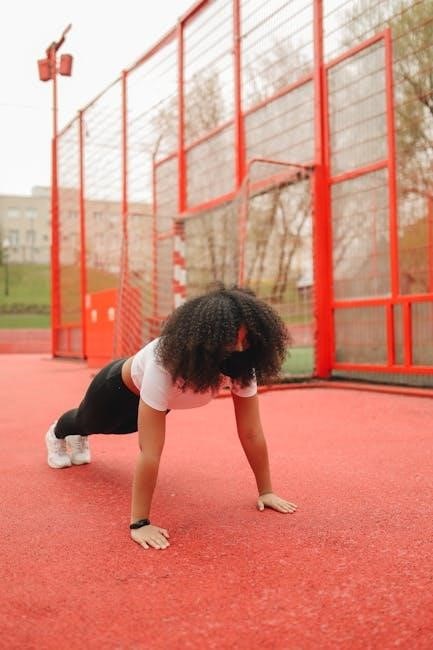
Pull day focuses on back, biceps, and posterior deltoids, creating balanced muscle development. This routine utilizes exercises to strengthen pulling movements for overall physique.
Back Exercises
Developing a strong back is crucial for overall strength and posture. Incorporate a variety of exercises targeting different back muscles for comprehensive development. Pull-ups, a cornerstone exercise, build upper back strength and grip. Lat pulldowns offer a scalable alternative for those unable to perform pull-ups. Barbell rows, both bent-over and T-bar, effectively target the entire back musculature, promoting thickness and power.
Seated cable rows provide a controlled movement, emphasizing back muscle activation. Face pulls are excellent for strengthening the rear deltoids and improving shoulder health. Remember to focus on proper form throughout each exercise to maximize effectiveness and minimize injury risk. Varying rep ranges and sets will further stimulate muscle growth and strength gains throughout the 12-week program.
Biceps Exercises
Targeting the biceps effectively requires a mix of exercises focusing on different aspects of the muscle. Barbell curls are a classic choice, allowing for heavier loads and overall mass building. Dumbbell curls, performed alternating or simultaneously, offer greater range of motion and individual arm development. Hammer curls target the brachialis and brachioradialis, contributing to overall arm size and strength.
Concentration curls isolate the biceps, maximizing muscle activation and promoting peak contraction. Cable curls provide constant tension throughout the movement, enhancing muscle endurance; Prioritize controlled movements and avoid swinging to maintain proper form and prevent injury. Adjust weight and reps to challenge your biceps throughout the 12-week program.
Posterior Deltoid Exercises
Strengthening the posterior deltoids is crucial for shoulder health and balanced development. Face pulls are excellent for activating these often-neglected muscles, improving posture and shoulder stability. Reverse flyes, performed with dumbbells or on a machine, isolate the posterior deltoids, promoting hypertrophy. Bent-over lateral raises target the rear delts while minimizing stress on the lower back.
Cable pull-aparts offer constant tension and a wide range of motion, enhancing muscle endurance. Incorporate these exercises into your pull days, focusing on controlled movements and proper form. Prioritize feeling the contraction in the rear deltoids throughout each repetition. Adjust weight and reps to progressively challenge these muscles during the 12-week program.
Leg Day Exercises
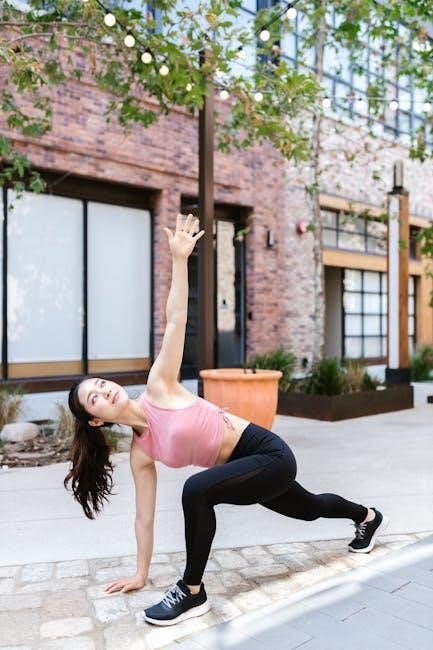
Leg day focuses on quadriceps, hamstrings, and calves, building lower body strength and power. Prioritize compound movements for optimal muscle growth and overall performance.
Quadriceps Exercises
Targeting the quadriceps is crucial for leg day, focusing on exercises that build strength and size in the front of the thighs. Barbell squats are a cornerstone, promoting overall lower body development and functional strength. Leg presses offer a controlled environment for heavy loading, minimizing lower back stress.
Lunges, both walking and stationary, enhance balance and unilateral strength, addressing muscle imbalances. Leg extensions isolate the quads, providing a focused burn and promoting hypertrophy. Front squats place greater emphasis on the quads compared to back squats, offering a variation for targeted growth. Incorporate these exercises strategically throughout the 12-week program, adjusting weight and reps to align with each phase’s goals.
Hamstring Exercises
Developing the hamstrings is vital for balanced leg development and injury prevention. Romanian deadlifts (RDLs) are a primary exercise, emphasizing the hamstring stretch under load and building posterior chain strength. Lying leg curls isolate the hamstrings, allowing for focused contraction and hypertrophy.
Good mornings target the hamstrings and lower back, improving hip hinge mechanics and overall posterior chain stability. Glute-ham raises are an advanced exercise demanding significant hamstring strength and control. Incorporate these exercises into your 12-week PPL program, progressively increasing resistance and focusing on proper form to maximize results and minimize risk.
Calf Exercises
Calf development often requires dedicated attention, as they respond well to high-volume training. Standing calf raises, performed on a calf raise machine or with dumbbells, effectively target the gastrocnemius, the larger calf muscle. Seated calf raises isolate the soleus, the muscle underneath the gastrocnemius, providing a more focused stimulus.
Include variations like single-leg calf raises to increase intensity and address any muscle imbalances. Within your 12-week PPL program, prioritize controlled movements and a full range of motion. Progressive overload, through increased weight or repetitions, is key to achieving noticeable calf growth and definition.

Program Considerations & Adjustments
Regularly assess your progress and adjust the program every 8-12 weeks to prevent plateaus and continue stimulating muscle growth effectively.
Importance of Warm-up & Cool-down
Prioritizing warm-up and cool-down routines is crucial for maximizing the effectiveness of your 12-week PPL program and minimizing injury risk. A dynamic warm-up prepares your muscles for the intense work ahead, increasing blood flow and improving range of motion.
Include exercises like arm circles, leg swings, and torso twists before each workout. Conversely, a proper cool-down aids recovery by gradually lowering your heart rate and reducing muscle soreness. Static stretches, holding each stretch for 20-30 seconds, are ideal for cool-downs.
Don’t skip these vital components; they contribute significantly to long-term progress and overall well-being throughout your training journey. Consistent implementation ensures optimal performance and sustained gains.